

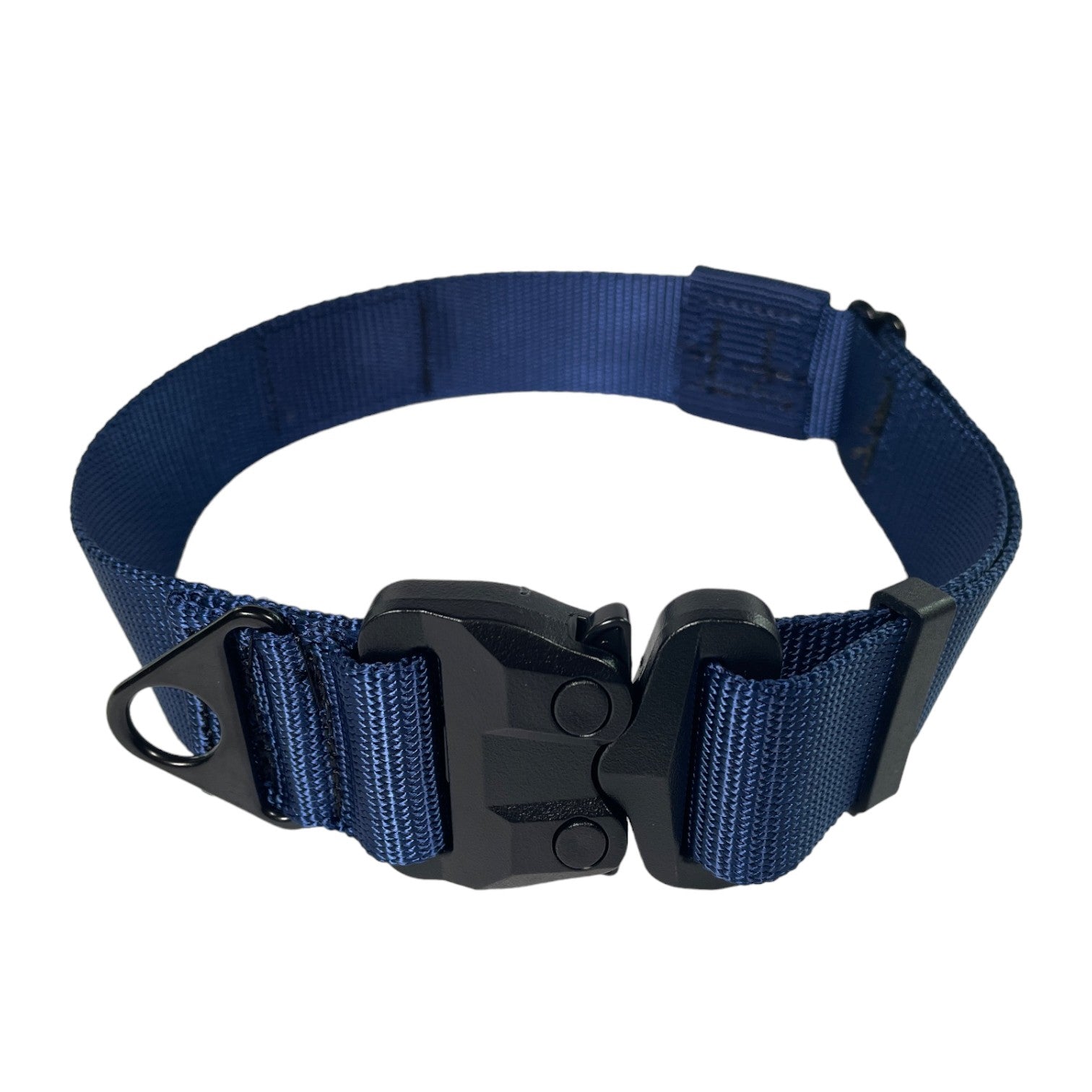

What Is a Martingale Collar (and Why It Works for Dogs That Slip Out of Everything)
If your dog has ever slipped out of a collar, you know how fast things can go from a normal walk to a dangerous situation.
It usually happens the same way:
Your dog gets startled or decides to back up—and suddenly they’re free.
Most people assume:
- The collar wasn’t tight enough
- They need a different size
- Or maybe a harness will fix it
But in many cases, the real issue isn’t fit.
It’s design.

Why Some Dogs Slip Out of Collars So Easily
A standard flat collar works fine—until it doesn’t.
Dogs who tend to slip out usually fall into a few categories:
- Dogs that back up when pressured
- Dogs with heads smaller than their necks
- Strong, determined dogs that don’t panic—they problem-solve
This includes more dogs than people realize: bully breeds, young and untrained pullers, “nervous retreaters”, dogs with narrow heads (think whippets, greyhounds etc.).
When these dogs pull backward, a flat collar doesn’t tighten—it just slides right over the head.
Here is what doesn’t always work to fix this issue: tightening a regular collar, switching to a harness, getting a thicker, heavier collar. Why? Because the problem is still the same: There’s nothing preventing the collar from slipping over the head (or from backing out of a harness).
What a Martingale Collar Does Differently
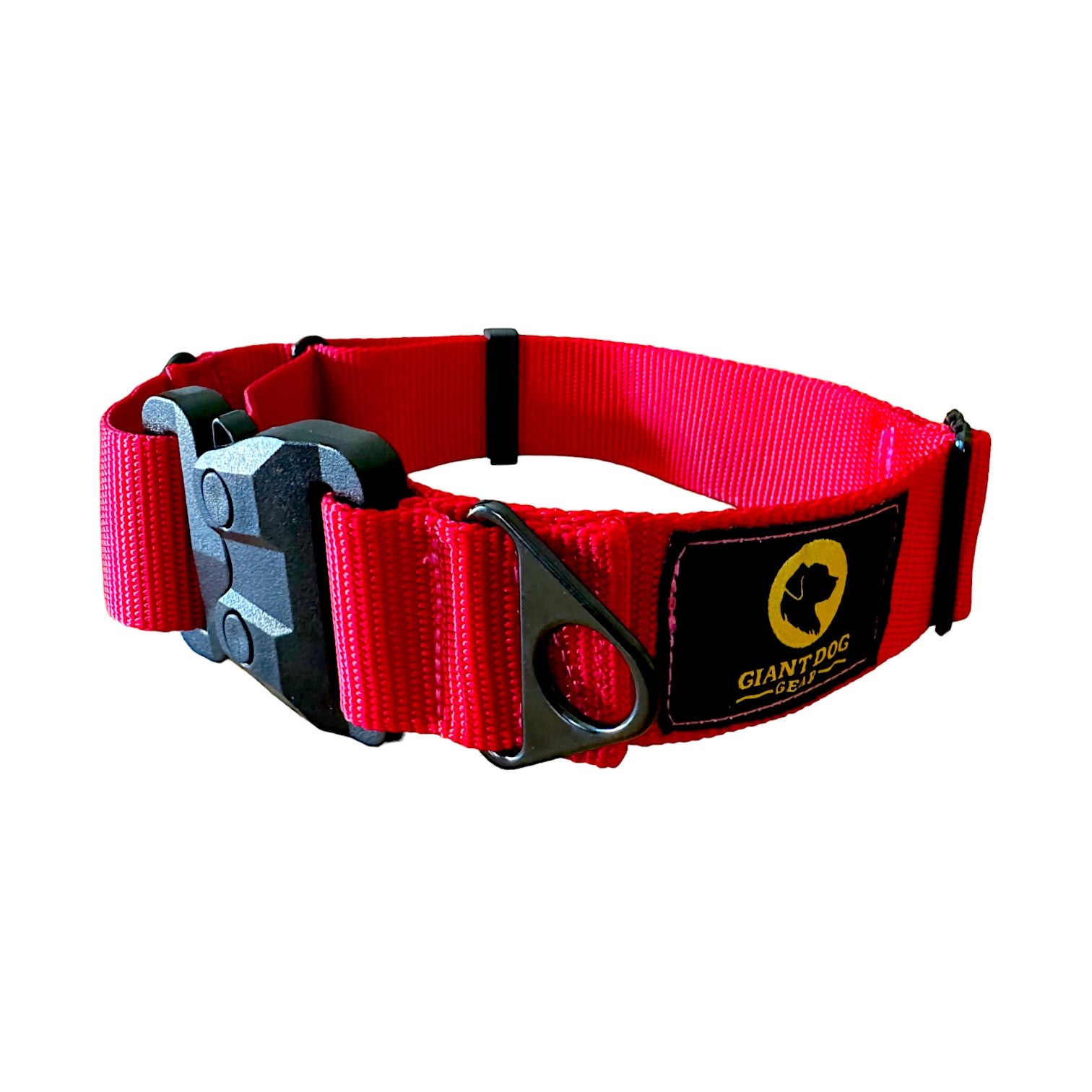
A martingale collar is designed to tighten slightly when your dog pulls or backs up—just enough to prevent escape, but not enough to choke.
It has two loops:
- A main loop that sits around the neck
- A smaller control loop that tightens when tension is applied
When your dog pulls back the collar gently closes and stops at a safe limit, so it stays in place instead of slipping off. We have had several customers stop using a prong collar after getting a martingale, because the martingale collar stopped the ‘collar escape’ behavior when walking on a leash in a much gentler way. When there’s no tension, a martingale collar relaxes back to a looser fit, so some dogs pull less when wearing one on a leash.
Why This Matters (Especially for “Escape Artists”)
For dogs that back out of collars, this creates a completely different outcome:
Instead of slipping free in a split second, you get a secure, controlled dog in a collar.
It’s not about making a regular collar tighter, it’s about using a collar that is engineered to adjust tightness on its own when it is needed.

What to Look for in a Good Martingale Collar
Not all martingales are built the same.
Important things to look for:
- Limited closure (it should never choke)
- Durable materials that don’t stretch out over time
- Strong hardware that holds up under real force
- Proper sizing so it fits correctly when relaxed
A poorly made one can defeat the purpose—especially with strong dogs.
If your dog has ever slipped out once, it’s worth fixing before it happens again.
If you’ve been dealing with slipping collars, constant adjustments, or that uneasy feeling on walks…
There’s a better option.
Martingale collars are one of those tools that people don’t think they need—
until they see how they work.
Leave a comment